Challenger Panels and Recalled Breakers
Updated 2026-10-30
The one U.S. Consumer Product Safety Commission (CPSC) recall we found for Challenger covers specific breakers, not whole panels: in 1988 Challenger offered to replace about 9,000 ground-fault (GFCI) circuit breakers, types HAGF-15 and HAGF-20, because a part could come loose and stop the ground-fault protection from working. The CPSC said normal circuit breaker functions were not affected. Separately, home inspectors have reported overheated bus bars in some Challenger panels, but InspectAPedia notes there isn’t the large body of failure data that exists for Federal Pacific. If you have a Challenger panel, have a licensed electrician check it for the recalled breakers and for signs of heat, and ask for a written quote if replacement makes sense.
Are Challenger panels dangerous?
Here is what the record supports, and what it doesn’t:
- Documented: the 1988 CPSC replacement program for HAGF-15 and HAGF-20 GFCI breakers, explained below.
- Reported, not studied: InspectAPedia publishes reports from inspectors and electricians who found discolored, overheated bus bars (the metal bars the breakers clip onto) in Challenger panels. Its editor says he does not have the same large body of failure data for Challenger as for Federal Pacific Stab-Lok, and cautions against naming a cause without forensic analysis.
- Age: Fixr, a cost guide, says Challenger was a popular panel up to and through the 1980s, and that for older brands like this, “it is time to update.”
Some web pages describe the 1988 action as a recall of Challenger panels. The CPSC notice itself covers only the two GFCI breaker types.
The 1988 Challenger breaker recall explained
According to the CPSC notice (Recall number 88-095, November 12, 1988):
- What: about 9,000 Type HAGF-15 and HAGF-20 single-pole GFCI circuit breakers made by Challenger Electrical Equipment Corp. of Malvern, Pennsylvania. The CPSC said approximately 9,000 of these breakers had not been located and some were believed to be installed in homes.
- When made: between February 22 and April 29, 1988. Most were sold through electrical distributors, some through hardware or lumber stores.
- The problem: Challenger’s quality-control testing found that a mechanical part could come loose and stop the ground-fault feature from working. Normal circuit breaker functions were not affected, and no shocks had been reported.
- Which homes: the program applied to homes built since February 1988 or where electrical work was done after that date.
- What the CPSC advised: have a licensed electrician inspect the panel and replace any affected breakers.
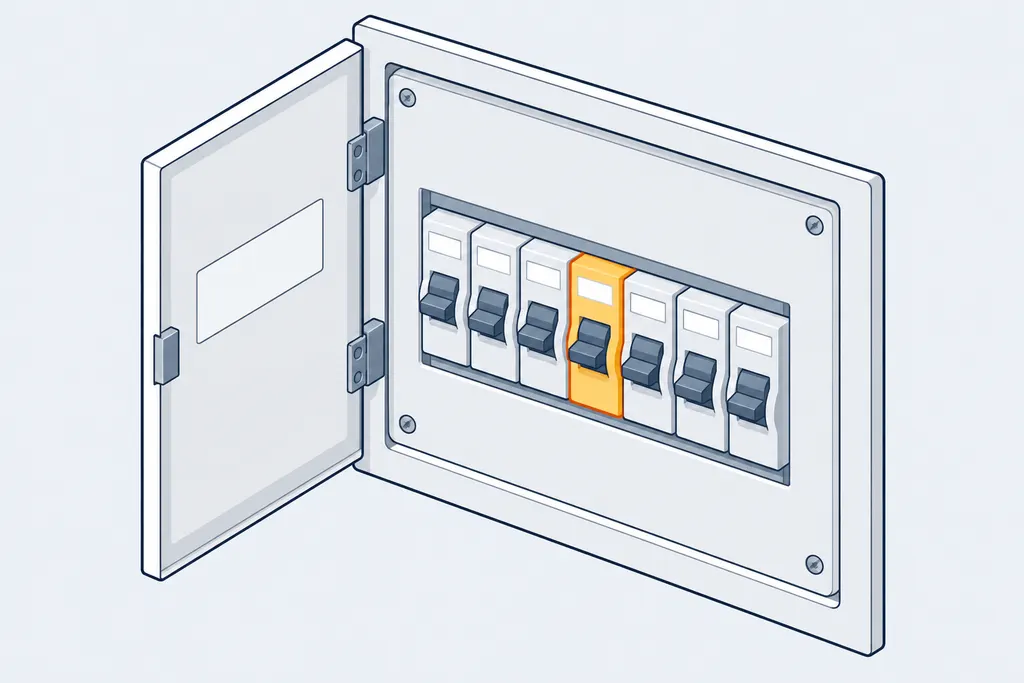
The CPSC describes the affected breakers this way: a yellow test button with the word “test” in raised letters on one side, and a 15 or 20 in white between “ON” and “OFF” on the handle. Breakers are not affected if the handle number is black, or if a label with white lettering sits next to the word “test.” You don’t need to handle anything to compare; if you’d rather not look closely, the electrician can check.
The CPSC notes the company can no longer be reached at the phone numbers in the original release, so the practical route today is the electrician.
How to recognize a Challenger panel from the label
The CPSC says the name “Challenger” is embossed on the panel door handle and/or printed on a label on the back of the panel or the door. Opening the hinged door to read it is fine; never remove the inner cover that sits around the breakers.
Challenger breakers can also turn up in other panels: Great American Insurance Group lists Challenger among the makers or vendors of Zinsco-style breakers. If your panel says Zinsco or Sylvania, see Zinsco Panels: How to Identify and What to Do.
Our Panel Risk Check asks about the brand and warning signs and helps you see how urgent a visit is.
Warning signs to report to an electrician
If the panel feels warm or buzzes, have a licensed electrician look at it soon. If you smell burning, see smoke, or the panel is hot to the touch, leave the area and call 911.
Tell the electrician about any breaker that keeps tripping, and don’t just keep resetting it; see Why Does My Breaker Keep Tripping?
Evaluate, repair or replace: what to ask the electrician
- Are any HAGF-15 or HAGF-20 breakers from the 1988 recall in the panel?
- Are there signs of overheating at the breaker connections or the bus bar? For a panel with an overheated bus and damaged insulation, InspectAPedia’s editor says it is “reasonable to conclude that the panel is not safe, not repairable, and should be replaced.”
- If the panel is in good shape, what does the electrician recommend, and why?
- If replacement makes sense, what’s in the written quote: panel, breakers, permit and inspection?
An initial electrical inspection costs $125–$250, according to Fixr. If replacement makes sense, two cost guides give these ranges:
| Panel size | This Old House (2026) | Fixr (2025) |
|---|---|---|
| 100 amp | $800–$1,500 | $1,000–$1,600 |
| 200 amp | $1,300–$3,000 | $1,600–$4,000 |
This Old House prices a panel plus installation; Fixr’s figures are replacements with labor. A permit adds $50–$300 (This Old House). See Electrical Panel Replacement Cost for the full breakdown.
Challenger panels in home inspections and insurance
If a home inspector names a Challenger panel in a report, the next step is the electrician’s evaluation above. Insurers set their own rules, so ask your insurer whether a Challenger panel affects your coverage or premium, ideally before you close on a house.
FAQ
Were all Challenger panels recalled? The CPSC recall we found covers about 9,000 HAGF-15 and HAGF-20 GFCI breakers made in 1988, not whole panels.
Did the recalled breakers stop protecting against overloads? The CPSC said normal circuit breaker functions were not affected; the problem was with the ground-fault feature.
Can I check the breakers myself? You can read the label and look at the breaker handles through the open door. Don’t remove the cover or test the breakers; that’s a job for a licensed electrician.
Illustrations on this page are AI-generated to help you picture the situation. They are not photos of real homes, jobs or people.
Sources
- U.S. CPSC — Challenger Electrical Equipment Corp. Offers Replacement Program for 9,000 GFCI Circuit Breakers (Recall number 88-095, Nov 12, 1988)
- InspectAPedia (Daniel Friedman) — Challenger Electrical Panel Failure Reports (no update date shown; latest dated report Nov 2019)
- Great American Insurance Group — Is Your Electric Panel a Fire Risk? (Loss Control article, no date shown; read Oct 30, 2026)
- This Old House — What Is the Cost to Upgrade an Electrical Panel? (updated Mar 31, 2026)
- Fixr — Electrical Panel Upgrade Cost (updated Jan 31, 2025)