Knob-and-Tube Wiring: Risks, Insurance, Replacement
Updated 2026-10-30
Knob-and-tube is the earliest home wiring system: separate wires held on ceramic knobs and passed through ceramic tubes, used in homes in the early 20th century (This Old House, Progressive). It isn’t automatically dangerous: properly installed wiring in good condition “isn’t inherently dangerous,” according to the International Association of Certified Home Inspectors, as quoted by insurer Progressive. The risk comes from age, insulation and missing grounding — the wiring can fray and deteriorate, it can be a greater fire risk when it is surrounded by insulation and carrying a heavy load, and it has no ground wire. It also makes homeowners insurance harder to get: Progressive says many insurers decline these homes. If your house has it, have a licensed electrician check which circuits are still live and what condition they’re in, then decide on replacement.
Is knob-and-tube wiring dangerous?
The sources separate condition from age:
- Condition matters. In a This Old House buying guide, master electrician Heath Eastman says an outdated system isn’t automatically bad or unsafe — but he treats knob-and-tube and screw-in fuses as red flags to replace and budget for.
- The insulation on the wire ages. American Family Insurance says the wire’s insulation can deteriorate, dry and crack as it ages, which can expose the copper.
- Connections and overloads. This Old House says knob-and-tube’s soldered connections may melt if too much current flows through them.
- No ground. Knob-and-tube has no ground wire and, per This Old House, cannot be grounded or spliced into a grounded circuit.
How to recognize knob-and-tube wiring
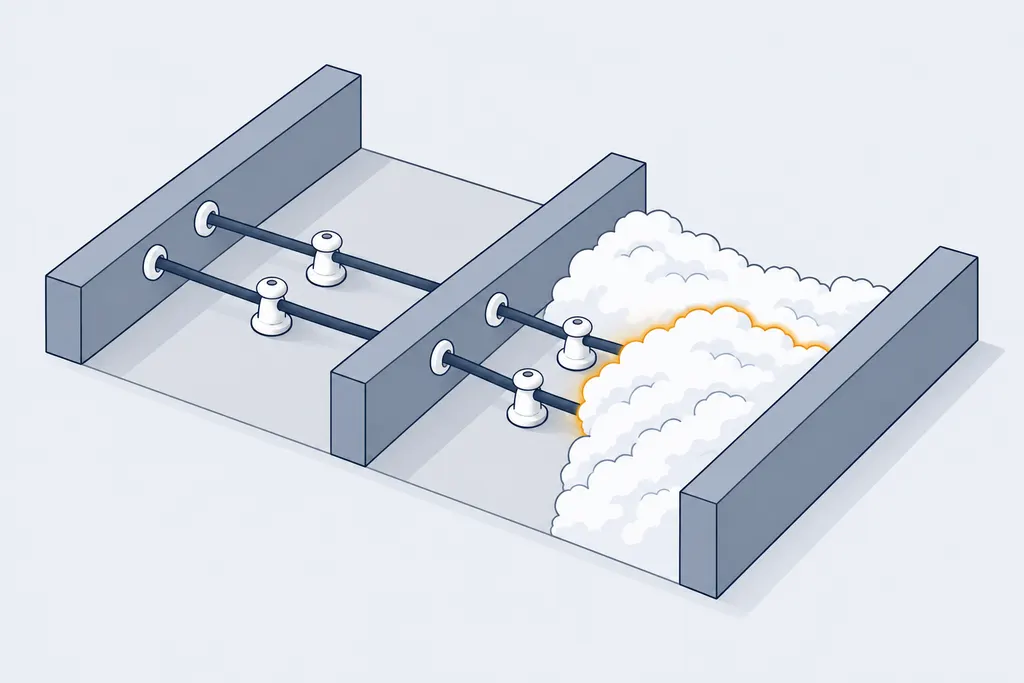
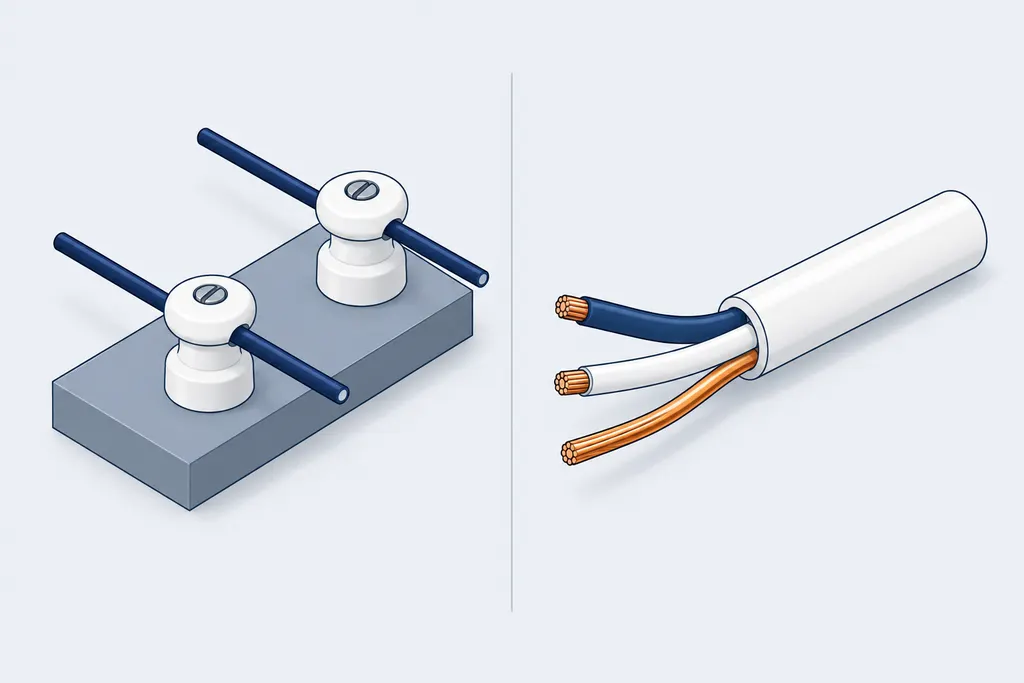
This Old House describes the system as a cloth-covered hot wire and a neutral wire running parallel, about a foot apart. Ceramic knobs hold the wires to the house framing, and ceramic tubes protect them where they pass through joists and studs. The Center for Energy and Environment, a Minnesota nonprofit, adds that the wires often have a rubber or asphalt-saturated cloth coating.
Progressive dates it to homes from the early 20th century; ENERGY STAR describes it as pre-1930, and the Center for Energy and Environment says it was phased out in the 1940s. You may spot it in an unfinished attic. Look, but don’t touch or move the wires — or ask an electrician or home inspector to check. An electrician can confirm what you have and whether it’s still live.
Why the risk grows with age and insulation
Insulation is the main concern in the sources:
- ENERGY STAR says knob-and-tube can be a fire hazard when in contact with insulation.
- This Old House says building insulation causes this wiring to overheat, and that circuits covered with insulation should be rewired or disconnected — work for an electrician.
- The Center for Energy and Environment says heat from the wires can make the rubber coating brittle enough to break, which can expose live wires, and that insulation contractors will not insulate spaces with active knob-and-tube.
- As early as 1980, the U.S. Consumer Product Safety Commission advised homeowners to have any home wiring checked by a qualified person before installing thermal insulation.
Local codes can be strict. Menlo Park, California, citing the California Electrical Code, says concealed knob-and-tube is not allowed in wall, ceiling and attic spaces filled with loose, rolled or foamed-in-place insulation, unless a licensed electrical contractor certifies the wiring is in good condition and other conditions are met. Ask your building department what applies where you live.
If an outlet or switch feels warm or buzzes, have a licensed electrician look at it soon. If you smell burning, see smoke, or the outlet or switch is hot to the touch, leave the area and call 911.
Knob-and-tube and home insurance
Here is what insurers themselves say:
- Progressive: getting homeowners insurance that covers knob-and-tube “can be tricky.” Some providers may offer a policy, many will decline, those willing to insure may charge a higher premium, and they may ask for an inspection report on the wiring’s condition before providing coverage.
- American Family Insurance: when homes have knob-and-tube or aluminum wiring, insurance companies may deny coverage; some providers will offer coverage while others deny it outright, and you could face higher premiums.
Both insurers say some companies cover these homes and others don’t, so ask yours directly:
- Will you cover the house with the wiring as it is, and at what premium?
- Do you need an electrician’s inspection report?
- Does inactive (disconnected) knob-and-tube matter, or only live circuits?
- If replacement is required, by when, and what proof do you accept?
Buying a house with knob-and-tube
Progressive recommends hiring a qualified electrician to inspect a home’s electrical system before you buy. This Old House notes that in some cases buyers can’t even get insurance with knob-and-tube, so call your insurer before closing, not after. A written replacement quote gives you a number to discuss with the seller — see Knob-and-Tube Replacement Cost.
Replacement options and when to call an electrician
- Find out what’s live. The Center for Energy and Environment says the first step is to have an electrician determine whether the knob-and-tube is active.
- Decide on scope. Fixr says it isn’t always necessary to change all of a home’s wiring at once — sometimes one room is enough. Menlo Park recommends removing all or part of any knob-and-tube found during construction, as far as practical, and requires permits and inspections for any repair, alteration or extension of an existing system.
- Get quotes. The Center for Energy and Environment recommends at least three estimates for a rewiring project.
- Keep the paperwork. Hold on to the invoice that says what was done, so an insurance agent or insulation contractor can verify it (Center for Energy and Environment).
This site doesn’t give instructions for electrical work; replacing knob-and-tube is a job for a licensed electrician with a permit. To estimate the budget, try the House Rewiring Cost Calculator. If the house also has fuses, see Fuse Box to Breaker Panel: Cost and Process, and for older panels, our Panel Risk Check.
FAQ
Is it illegal to have knob-and-tube wiring? None of the sources on this page says existing knob-and-tube must be removed everywhere. Rules on insulating around it and on altering it are set by state and local codes — ask your building department.
Does homeowners insurance cover knob-and-tube? It depends on the insurer. Progressive and American Family both say some insurers decline these homes. Ask your insurer.
Can I add insulation over it? Not before an electrician has checked the wiring — the CPSC advised a wiring check before insulating as early as 1980. ENERGY STAR says knob-and-tube can be a fire hazard when in contact with insulation, and some state and local codes restrict it.
Illustrations on this page are AI-generated to help you picture the situation. They are not photos of real homes, jobs or people.
Sources
- Progressive — Does Homeowners Insurance Cover Faulty Wiring? (updated Aug 15, 2023)
- American Family Insurance — Does homeowners insurance cover electrical wiring? (updated Mar 21, 2024)
- This Old House — 10 Electrical Wiring Problems Solved (updated May 25, 2026)
- This Old House — Deal Breakers When Buying a Home (updated May 30, 2026)
- Center for Energy and Environment — Dealing with knob-and-tube wiring (Feb 5, 2025)
- Center for Energy and Environment — About Us (page viewed Oct 30, 2026)
- ENERGY STAR — Getting Started (Do-It-Yourself Guide to Sealing and Insulating, page viewed Oct 30, 2026)
- ENERGY STAR — How to Hire an Attic Insulation Contractor (Feb 20, 2024)
- U.S. CPSC — CPSC Staff Suggests That Homeowners Check Electrical Wiring for Potential Fire Hazards (release 80-002, Feb 6, 1980)
- City of Menlo Park, CA — Knob and Tube Safety Wiring Requirements (page viewed Oct 30, 2026)
- Fixr — Average Costs to Wire a House (updated Jan 31, 2025)