200 Amp Panel Upgrade Cost (2026)
Updated 2026-10-30
Going from 100 to 200 amps costs $1,300 to $3,000 for most homeowners, about $2,150 on average, according to This Old House (updated March 2026). Fixr puts an upgrade to 200 amps at $1,800 to $4,500 and says most homeowners pay around $3,000 for a 100-to-200 amp upgrade. ENERGY STAR gives a lower figure, $1,000–$2,500, for upgrading a panel to “standard higher electric capacity” without naming the amperage — and warns that if the lines from the utility to your house also need upgrading, that part alone can run $2,000–$30,000. This Old House says rewiring circuits, upgrading service lines, tight spaces and local code requirements can push the price up.
200 amp costs from three sources
| Job | This Old House (2026) | Fixr (2025) | ENERGY STAR |
|---|---|---|---|
| 100 → 200 amp upgrade | $1,300–$3,000 (about $2,150 average) | $1,800–$4,500 (around $3,000 for most homeowners) | — |
| Panel upgrade to higher capacity (amperage not stated) | — | — | $1,000–$2,500 |
| Same-size 200 amp replacement | — | $1,600–$4,000 | — |
| New 200 amp panel where there is none | $1,800–$2,500 | — | — |
| 200 amp panel only, no labor | $250–$350 | — | — |
| Service upgrade (lines from the utility) | — | — | $2,000–$30,000 |
The guides use different data and define the job differently, so treat them as a range to check a quote against, not a price list. The panel itself is a small part of the bill; Fixr says labor can be 40% to 60% of the total.
What the price includes: panel, meter base, service cable, permit
Berkeley Lab’s 2024 technical brief explains who owns what:
- You generally own the weather head and mast, the service entrance wires, the meter socket (meter base) and the panel. Electricians design and build these to the National Electrical Code. With some underground services, the homeowner may also be responsible for the service wires on the property.
- The utility is generally responsible for everything from the service entrance connection back to its lines, including the service wires from the pole or street and the transformer; ask your utility who owns the meter. ENERGY STAR doesn’t say who pays for upgrading the utility’s lines — ask your utility.
- If the main breaker gets bigger, “the meter socket will likely require an upgrade as well,” the brief says.
- Under the 2023 National Electrical Code, upgrading the main panel triggers a requirement for a surge protective device. Ask your electrician which code edition your area uses and whether it applies.
- Local rules can add parts. Saint Paul, Minnesota, for example, enforces the 2023 code and requires an outside emergency disconnect even when a panel is replaced with one of the same amperage. Ask whether your city requires one and whether it’s in the quote.
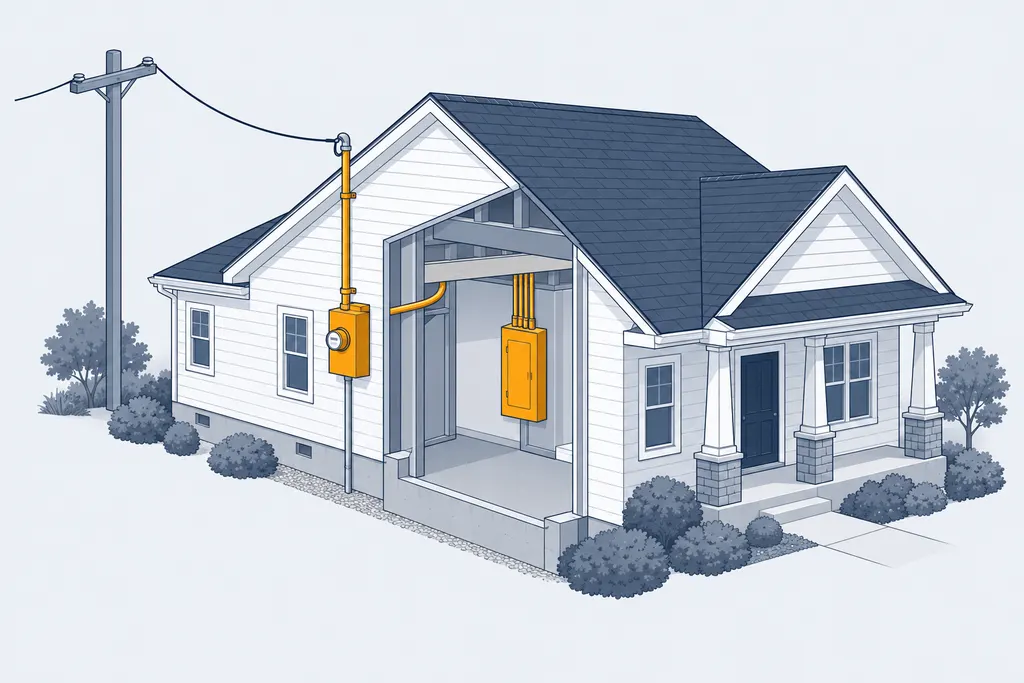
Line items that can show up on the quote:
| Item | This Old House (2026) | Fixr (2025) |
|---|---|---|
| Meter box, installed | $1,800–$3,500 | $200–$800 |
| Permit | $50–$300 | $50–$300 or more |
| Moving the panel | $800–$3,000 | about $1,000–$4,000 |
| AFCI or GFCI breaker, each | $35–$60 | — |
| Initial inspection by an electrician | — | $125–$250 |
The two guides are far apart on the meter box. Ask the electrician to price it as its own line so you can see which end your job is on.
What makes the job more expensive
Moving the panel adds the costs above; This Old House notes that moving it outdoors can add weatherproofing costs and possible drywall, siding or paint repairs.
Old wiring is the big wildcard. Berkeley Lab says wiring upgrades, “especially for legacy knob and tube style wiring,” may be needed when the panel is upgraded, with costs from about $5,000 to $30,000 or more depending on added loads, home size and how much rewiring is needed (Berkeley Lab, citing HomeGuide). See Knob-and-Tube Replacement Cost. Berkeley Lab also notes that some older panel models may be unsafe and must be replaced when electrical work is done, and a service upgrade can reveal them — see Federal Pacific Panels and Zinsco Panels.
Who does what: electrician, inspector, utility
- Electrician: “Your electrician will usually handle the permitting process,” This Old House says. Fixr adds that electricians may include the permit in their bid, “but it is a good idea to check.”
- Inspector: a city or municipal inspector checks the work and approves it or asks for changes (Fixr). Fixr also notes that some municipalities require an inspection by the local power company before any work begins.
- Utility: Berkeley Lab says the utility is usually involved in panel size upgrades to move the service wire to the new meter base and to move or upgrade the meter. PG&E, for example, asks for the building permit number when you request a disconnect and reconnect, and says it can reconnect service once the work has passed inspection.
Timing depends on the utility. For an upgrade with a new underground service line (which involves trenching), PG&E’s guide lists up to 66 calendar days to verify the application, about 55 days for design, and about 6–8 weeks to schedule its crew after the meter release. Ask your utility what applies to you. Permit steps are covered in Electrical Panel Upgrade Permits.
Signs your home needs more capacity
This Old House lists frequent breaker trips, lights that dim or flicker under load, and having to limit which appliances run together. ENERGY STAR says an upgrade may be needed if your main breaker reads 65, 100 or 125 amps and the panel has very few or no empty slots. An EV charger doesn’t always mean 200 amps: see Do I Need a 200 Amp Service?.
If the panel feels warm or buzzes, have a licensed electrician look at it soon. If you smell burning, see smoke, or the panel is hot to the touch, leave the area and call 911.
Rebates and tax credits
The federal tax credit for panel upgrades has ended. The IRS says the Energy Efficient Home Improvement Credit (up to $600 for a qualifying panel) can be claimed only “for improvements made through December 31, 2025,” so panel work done in 2026 doesn’t qualify.
Some states are setting up home electrification rebate programs with income limits that can cover a panel when it’s needed for a qualifying appliance; Minnesota’s, for example, is tied to household income compared with the area median, but as of October 2026 it had not launched. The U.S. Department of Energy says these rebates are managed by states, territories and tribes; check the status of your state’s program before counting on one.
Questions to ask before you sign
- Did you do a load calculation, and does my house need 200 amps?
- Are the meter base, service cable, permit and inspection in the price?
- Who arranges the utility disconnect and reconnect, and are there utility fees?
- Are a surge protective device, outside disconnect or AFCI/GFCI breakers required here, and are they in the quote?
- Is the final payment due after the job passes inspection and power is back on?
Get at least three written quotes for the same scope so you can compare them line by line. Hourly rates are in How Much Does an Electrician Cost per Hour?, and the full panel price breakdown is in Electrical Panel Replacement Cost.
Can I upgrade to 200 amps myself?
No. This site doesn’t give instructions for electrical work, and This Old House says panel upgrades are “not considered a do-it-yourself (DIY)-friendly project.” Hire a licensed electrician who pulls the permit.
FAQ
Will my homeowners insurance cover the upgrade? Ask your insurer, and ask whether your current panel affects your policy.
Illustrations on this page are AI-generated to help you picture the situation. They are not photos of real homes, jobs or people.
Sources
- This Old House — What Is the Cost to Upgrade an Electrical Panel? (updated Mar 31, 2026)
- Fixr — Electrical Panel Upgrade Cost (updated Jan 31, 2025)
- ENERGY STAR — Make Your Home Electric Ready (U.S. EPA, page undated; checked Oct 30, 2026)
- Berkeley Lab — Sizing Electric Service Panels and Utility Infrastructure for Residential Electrification (technical brief, July 2024)
- PG&E — Disconnect-Reconnect Customer Process (undated; checked Oct 30, 2026)
- PG&E — Electric Service Projects: residential panel upgrade with an upgraded service line (2026)
- U.S. Department of Energy — Home Upgrades (checked Oct 30, 2026)
- IRS — Energy Efficient Home Improvement Credit (reviewed Apr 28, 2026)
- Minnesota Department of Commerce — Home Electrification and Appliance Rebates (HEAR) (updated Oct 12, 2026)
- City of Saint Paul, MN, Safety and Inspections — Residential Electrical Service Upgrades, Replacements, Etc. (revised July 2023)